How Personal Brands Are Becoming Real Businesses
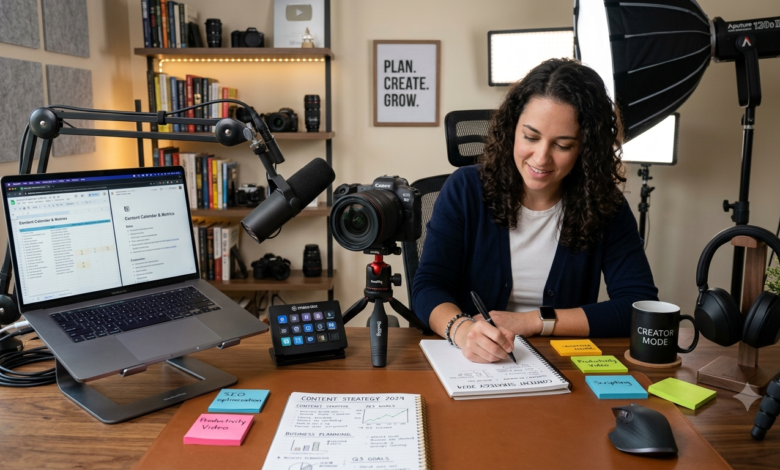
The New Creator Economy: How Personal Brands Are Becoming Serious Businesses
When Forbes published its 2026 Top Creators list in June, the headline figure was that the fifty highest-earning creators had collectively made just over $1 billion in a single year, for the first time in the ranking’s history. The more revealing number sat just beneath it: Jimmy Donaldson, better known as MrBeast, earned an estimated $300 million of that total — roughly 4.6 times more than Dhar Mann, the second-place creator at $65 million. Almost none of that $300 million came from a single sponsored video. It came from Beast Industries, a company spanning video production, the confectionery brand Feastables, a ghost-kitchen food venture, large-scale competition formats, and, as of a February 2026 deal, a fintech startup aimed at younger users.
That structure is the story. A decade ago, a creator’s business was, for practical purposes, whatever a platform’s ad program and a handful of brand deals paid out. Today, the most successful creators are running something closer to diversified small companies — with product lines, staff, intellectual property, and revenue that doesn’t disappear the moment a platform changes its algorithm. The shift isn’t limited to the handful of names at the very top of Forbes’ list. It’s visible, at smaller scale, across a huge and growing population of people who once would have called themselves influencers and increasingly describe themselves as founders.
The Creator Economy Is Growing Up
Sizing the creator economy precisely is difficult, and different research firms arrive at meaningfully different numbers depending on what they count. Research and Markets put the global market at approximately $323 billion in 2026, up from about $256 billion the previous year. Other estimates, including from Goldman Sachs and SNS Insider, place 2026 figures anywhere from roughly $200 billion to over $300 billion, with various projections putting the market between $480 billion and well over $1 trillion by the early 2030s. The disagreement isn’t a sign that the numbers are unreliable so much as evidence that “creator economy” still doesn’t have a single agreed definition — some estimates track only platform payouts and sponsorship spend, while others include the surrounding ecosystem of tools, agencies, and commerce.
What’s harder to dispute is how unevenly that money is distributed. Widely cited industry estimates put the global creator population above 200 million, yet only a small share — commonly cited around 4% — earn more than $100,000 a year, while roughly half earn under $15,000. That concentration is exactly why the businesses at the top look so different from the median creator’s side income. When the distance between the 50th-highest earner on Forbes’ list and the 10th is measured in tens of millions of dollars, staying competitive requires more than a good camera and a posting schedule.
From Influencer to Entrepreneur
The traditional influencer model rests on a simple exchange: attract an audience, then sell temporary access to that audience to advertisers. It’s still how most creators generate their first income, and it remains a real revenue line even for creators with far more sophisticated operations. But the model has structural limits. Earnings are tied to platform algorithms a creator doesn’t control, to advertiser budgets that rise and fall with the broader economy, and to a rate card that rarely scales as fast as an audience does.
The creators building the largest businesses have generally done something structurally different: they’ve treated their audience less like a rented billboard and more like a customer base, and built products or services that generate revenue independent of any single post. Mark Rober, a former NASA engineer who earned an estimated $30 million in the same Forbes period, illustrates the point well precisely because his primary business isn’t advertising. His YouTube videos generate attention, but CrunchLabs, his engineering-kit subscription box, is a standalone commerce operation with its own subscribers, retention curve, and supply chain — only loosely dependent on any individual video’s performance.
That’s the real dividing line between an influencer and an entrepreneur in this space: not follower count, but whether the content is the product or simply the marketing for one. It’s a structural change rather than a stylistic one, because it changes what a creator is actually building — a media presence, or a company that happens to have a media presence attached to it.
Why Personal Brands Have Become Valuable Business Assets
A personal brand functions, economically, as a bundle of trust, attention, and reputation that can be redirected toward more than one commercial purpose. Unlike a conventional corporate brand, which is typically built through years of marketing spend and product experience, a creator’s brand is built through direct, repeated, often unusually intimate contact with an audience — and that directness is exactly what makes it valuable.
Trust converts into pricing power in ways a conventional ad rarely matches. An audience that already believes a creator’s judgment about a product category tends to convert at rates far above generic advertising. It also converts into extensibility: a creator with credibility in personal finance, fitness, or comedy can typically launch an adjacent product or format and bring at least part of their existing audience with them, because the underlying relationship — not the specific piece of content — is the actual asset changing hands.
That analysis, from the newsletter platform beehiiv’s paid-newsletter research, points to something researchers in the space keep finding: the commercial intent of an audience often matters more than its raw size. Erika Kullberg, a personal-finance-focused attorney who appeared far down Forbes’ 2026 list with a comparatively modest following, out-earned several creators with audiences many times larger. Codie Sanchez, similarly, out-earned creators with meaningfully bigger reach. Owning a relationship with a smaller, highly specific audience can be worth more than owning attention from a much larger, less commercially engaged one — which is a very different logic than the follower-count-first thinking that defined the influencer era’s early years.
This is also where the risk in personal-brand value becomes visible. A company’s brand can typically survive a change in leadership. A creator’s brand is rarely separable from the individual behind it, so personal controversy, a health issue, or simply a change in interests can impair the underlying asset in ways that are much harder to hedge against than in a conventional business.
The Rise of Multiple Creator Revenue Streams
Diversification has moved from being a growth tactic to something closer to a survival requirement, and the range of models creators now stack together includes:
- Brand sponsorships and advertising — still the most common entry point, and still meaningful revenue even for the largest creators
- Affiliate marketing — commission-based promotion of third-party products
- Subscriptions and paid memberships — recurring revenue through platform tools or independent membership sites
- Digital products and online courses — templates, guides, and structured educational content sold directly
- Newsletters and podcasts — increasingly monetized in their own right through sponsorships and subscriptions, not just as promotional channels
- E-commerce and physical products — from basic merchandise to full consumer product lines, as with Feastables or CrunchLabs
- Licensing — of formats, characters, or intellectual property to other media companies or brands
- Events, coaching, and consulting — particularly common among creators in finance, business, and professional niches
- Software and technology products — a smaller but growing category, as some creators build tools for their own audiences or industries
Industry surveys tracking creator earnings consistently find that the highest-earning creators run more of these streams simultaneously than lower earners, who often depend on one or two. That spread isn’t purely about maximizing total revenue — it functions as a hedge. A creator earning from sponsorships, a course, and a paid community can absorb a weak quarter in any single channel without the entire business being at risk, in a way that a creator dependent solely on ad revenue or brand deals cannot.
Creators Are Learning to Own Their Audiences
The single most consequential shift in the creator economy over the past several years may not be a new revenue model at all — it’s a change in where creators choose to build. Newsletters, independent websites, podcasts, and paid communities have all seen renewed investment specifically because they sit outside the control of any one social platform’s algorithm, moderation policy, or business decisions.
The reasoning is straightforward. A creator with a million followers on a social platform has, in effect, rented distribution from that platform, and can lose meaningful access to it through an algorithm change, a policy shift, an account restriction, or — as many U.S. creators experienced during the 2025 uncertainty around a potential TikTok ban — a geopolitical dispute entirely outside their control. A creator with fifty thousand email subscribers owns that list outright and can reach all of them regardless of what any platform decides. It’s a smaller number, but a structurally more durable one.
This distinction between renting distribution and owning an asset explains why so much of the tooling built around creators in the past few years — newsletter platforms, community software, direct-to-consumer storefronts — is explicitly marketed around audience ownership rather than reach alone. It doesn’t eliminate platform dependency; most creators still rely on social platforms to acquire new audience members in the first place. What it changes is what happens after discovery: the platform becomes an acquisition channel feeding an owned asset, rather than the entirety of the business.
The Business Infrastructure Behind a Successful Creator
The image of a creator filming, editing, and posting entirely alone increasingly describes an early career stage rather than a mature one. As revenue diversifies, operational complexity grows with it, and established creator businesses increasingly rely on roles that would be familiar inside any small media or consumer company:
- Editors, videographers, and producers handling day-to-day content
- Designers for merchandise, brand identity, and visual consistency
- Managers who negotiate partnerships and handle business development
- Accountants and lawyers managing the tax and contractual complexity of multiple revenue streams, sometimes across multiple legal entities
- Marketing and operations specialists running paid acquisition, e-commerce logistics, or community management
- Agencies that provide some or all of the above as an outsourced bundle for creators not yet ready to hire directly
This changes the underlying economics in a specific way: margins tend to compress as headcount grows, but revenue durability tends to improve, because institutional knowledge and workload no longer live entirely inside one person. It also introduces a real tension that doesn’t have a clean resolution. Building a team is what allows a creator to produce and earn beyond what one person physically can — but the personal, unscripted quality that built the audience in the first place has to survive being filtered through more people and more process, and it doesn’t always.
How AI Is Changing Creator Businesses
Creators have adopted generative AI tools faster than many other knowledge-work fields. Adobe’s 2026 Creators’ Toolkit Report, based on a survey of more than 16,000 creators across eight countries conducted with The Harris Poll, found that a strong majority of creators using creative AI say it has helped grow their business and audience, with adoption having become close to standard practice among respondents. Separately, the newsletter platform Kit surveyed 550 creators in April 2026 and found that general-purpose AI assistants — ChatGPT and Claude were the two most widely used, followed by Gemini and image-generation tools — have become more common among creators than specialized AI writing software, and that the large majority of respondents said they always review and edit AI output before publishing rather than posting it unaltered.
In practice, the reported use cases cluster around tasks adjacent to core creative work rather than replacing it outright: brainstorming, drafting first passes of scripts or newsletter copy, analyzing audience and performance data, and automating repetitive production steps like captioning or basic editing. Notably, Adobe’s research also found creators were protective of final creative authority even as AI use grew — a strong majority said the final creative decision should always remain with the human creator, regardless of how automated the surrounding workflow becomes.
The competitive effects are genuinely unsettled, and any claims here should be read as analysis rather than fact. AI tools appear to be lowering the cost of producing content, which could help smaller creators compete on volume with better-resourced ones — but the same lowered barrier applies to everyone simultaneously, which could just as easily intensify competition and content saturation rather than leveling the field. There’s also an open question around differentiation: as AI-assisted production becomes close to universal, the audiences most valuable to creators may start placing a premium on content that’s identifiably, verifiably human — though whether that preference becomes commercially significant, or simply a niche concern, isn’t yet clear from available evidence. Copyright and training-data questions around AI tools remain unresolved in ways that could still affect how creators are legally permitted to use them.
The Risks of Turning Yourself Into a Business
Professionalizing hasn’t eliminated the creator economy’s underlying instabilities so much as changed their shape.
Platform dependency persists even for creators actively working to diversify, since most new audience growth still originates on social platforms whose policies and algorithms can shift without warning — a risk Vine’s 2016 shutdown made concrete for an earlier generation of creators, and one the 2025 TikTok uncertainty renewed for a much larger one. Audience fatigue and volatility compound this: attention that arrived quickly, often through a single viral moment, can leave just as quickly.
Burnout is a well-documented hazard of a business model that typically depends on one person’s continuous, personal output — unlike a traditional employee, a creator usually can’t hand their role to someone else without changing what the audience is actually there for. Reputation risk is proportionally larger too, because the brand and the individual are rarely fully separable; a personal controversy can affect every revenue stream at once rather than being contained to a single business unit, and it raises real questions about how much of one’s personal life and relationships become, in effect, commercial material.
Income volatility remains real even for diversified creators, since sponsorship rates, platform payouts, and e-commerce margins move independently of each other and sometimes fall together. Increasing competition is a direct consequence of the creator economy’s own growth and of falling production costs, AI-assisted or otherwise. And the legal and tax obligations that accompany multiple revenue streams — sometimes spanning several entities or jurisdictions — are a genuine operational burden that catches many creators unprepared once income moves past hobbyist levels.
None of this should be read as an argument against building a creator business. It’s a reminder, grounded in how the numbers are actually distributed, that turning a personal brand into a company is not automatically a path to financial security, and that the same visibility that creates opportunity also creates exposure that a private, traditional business owner simply doesn’t carry.
Where the Creator Economy Goes Next
The following section moves from documented trend into analysis and prediction, and should be read as such.
Consolidation at the top seems likely to continue, with the largest creator businesses increasingly resembling conventional media and consumer companies — raising capital, making acquisitions, and building management layers that outlast any individual piece of content. MrBeast’s move into fintech through the Step acquisition is an unusually explicit early example of a creator shifting from promoting infrastructure to owning it, and it’s plausible that more large creators pursue comparable moves into adjacent industries over the next several years.
Owned-audience infrastructure will likely keep growing in relative importance compared with pure platform reach, as more creators come to treat platform dependency as a risk to actively manage rather than an unavoidable cost of the business. It’s also reasonable to expect deeper partnerships between creators and established companies — not just as sponsors, but as co-owners of products, equity partners, or acquirers, following a pattern some larger creators have already begun.
AI’s long-run effect on competition within the creator economy remains genuinely uncertain, and it isn’t yet clear whether the technology will ultimately favor established creators with existing trust and distribution, or newcomers who can now produce at a scale that would previously have required a team. What does seem plausible is that the value of demonstrably human, differentiated judgment — the kind Mark Rober’s engineering background or Erika Kullberg’s legal training bring to their niches — becomes more, not less, important as production itself becomes cheaper and more automated.
The line connecting a $300 million media-and-consumer-goods operation to a creator running a modest paid newsletter is the same one: both are attempts to convert something intangible — trust, expertise, attention — into something durable enough to outlast the platform that made it possible in the first place. That conversion isn’t automatic, and it isn’t guaranteed. Most creators still depend on one or two income sources, most still carry meaningful platform risk, and the tools reshaping the field, from AI to owned-audience platforms, are new enough that their long-term effects aren’t fully understood yet, by creators or by the researchers studying them.
What has genuinely changed is the ceiling. A decade ago, being a creator mostly meant monetizing an audience through ads and sponsorships. Today it increasingly means running a business — with the revenue diversity, operational complexity, staffing decisions, and risk exposure that phrase implies. Whether that shift keeps concentrating at the very top of the market, as the current earnings data suggests, or spreads more evenly through the much larger population of creators earning a modest but real living from their work, is likely to remain one of the more consequential open questions in digital media for the next several years.